
60th Anniversary SAR Battlefield Tour - 2005
Monday, April 25 This
day the tour visited or drove past many of the War Grave Cemeteries.
It's hard to absorb numbers such as 1,100,000 dead in 900 cemeteries,
and another 500,000 dead or missing. Some cemeteries are very
small, while others, particularly near where there were hospitals,
are very large. This
day the tour visited or drove past many of the War Grave Cemeteries.
It's hard to absorb numbers such as 1,100,000 dead in 900 cemeteries,
and another 500,000 dead or missing. Some cemeteries are very
small, while others, particularly near where there were hospitals,
are very large.Before leaving this morning the group heard an excellent lecture about WWI. Later they drove towards Vimy Ridge seeing the countryside that at one time was under so much danger. Arriving at Vimy Ridge in the rain it made it seem so much like it had been for those in the trenches with rain and mud. There was rain and mud here too, but this time it was of reconstruction going on. It's difficult to understand why our government would approve of repairs during the year of the 60th anniversary when they could reasonably expect a lot of visitors coming to see the site. After a light lunch at Armetiers the buses drove to the historic town of Ypres, in Flanders. Ypres had a population in the 1200's greater than today. The Menin Gate marks the place where the ancient wall of the town was opened to make the entrance wider. Thousands of soldiers marched through it onto the Menin Road, and into history.  The
British built the Menin Gate Memorial to the Missing in Action
soldiers, those whose gravesites are unknown. However it was
not large enough for all those names, so more are listed in
a cemetery near Pachendale. The people of the area still remember
the dead in a nightly ceremony when the traffic is stopped and
buglers play the Last Post. Up the stairs there is a small garden
with beautiful trees and flowers. The
British built the Menin Gate Memorial to the Missing in Action
soldiers, those whose gravesites are unknown. However it was
not large enough for all those names, so more are listed in
a cemetery near Pachendale. The people of the area still remember
the dead in a nightly ceremony when the traffic is stopped and
buglers play the Last Post. Up the stairs there is a small garden
with beautiful trees and flowers.There was also a stop at the Essex Farm Cemetery where there is the site of Col. McCrae's hospital which is a low concrete bunker in a damp area. It's very hard to imagine this being a shelter and a house of healing. Col. McCrae wrote 'In Flanders Fields' which has become the most remembered poem about the wars in Europe. The tour group decided as they were driving by Pachendale, that they would like to drive through it. What terrible battles must have occurred around and in the town. It's thought that at least 100,000 dead are buried under the city. As with most of these towns, there is very little that you see that would lead you to believe the areas had been damaged in a terrible war. |
|
Page:
|
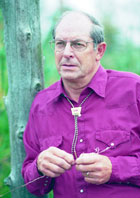 James Stoness
Phone: 613-353-2444
Email: jstoness@kos.net
5278 McFadden Rd RR2
Perth Road ON
K0H 2L0
CANADA